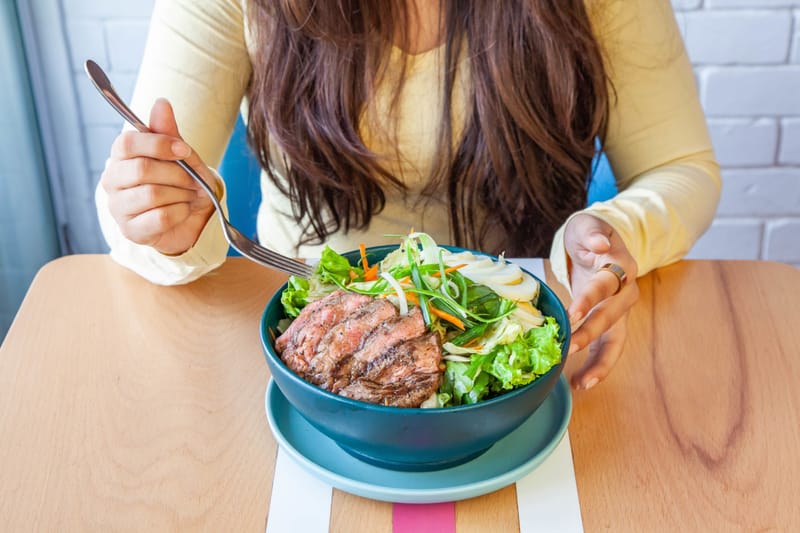
How Protein Supports Fat Loss (and Why It Helps to Include It at Every Meal)
Protein plays an important role in successful fat loss. While calories still matter, what you eat also affects how your body responds to food, how full you feel after meals, and how easy it is to stay consistent with healthy eating over time.
Protein helps preserve muscle, reduce hunger, and improve weight-loss results, making it one of the most important parts of your diet when trying to lose body fat.
What happens in your body when you eat protein?
When you eat protein, your body breaks it down into amino acids. These are used to:
- maintain muscle
- support metabolism
- repair tissues
- produce hormones and enzymes involved in appetite and energy regulation
Unlike carbohydrates, protein is digested more slowly. This slower digestion helps you feel fuller for longer and supports steadier energy levels between meals.
Because of this, including protein regularly throughout the day can make healthy eating easier to maintain.
How protein helps control blood sugar and energy levels
Carbohydrates are an important source of energy, but when eaten on their own they can sometimes cause blood glucose levels to rise more quickly. This can lead to energy dips later and increased hunger between meals.
Eating protein alongside carbohydrates slows digestion and the release of glucose into the bloodstream. This helps support:
- steadier energy levels
- improved appetite control
- fewer cravings between meals
This is one reason why including a source of protein at each meal can be helpful when trying to lose body fat.
Protein requires more energy to digest than carbohydrates or fat
Another reason protein supports fat loss is something called the thermic effect of food. This means the body uses calories simply to digest and process what you eat.
Protein has a much higher thermic effect than carbohydrates or fats.
On average:
- around 20–30% of the calories from protein are used during digestion
- compared with 5–10% from carbohydrates
- and only 0–3% from fats
This means your body naturally burns more energy processing protein than it does when digesting the same number of calories from carbohydrates or fats.
Over time, this slightly increases overall daily energy use and supports fat-loss progress.
Why preserving muscle matters during weight loss
When weight loss happens too quickly or protein intake is too low, the body can lose muscle as well as body fat.
Muscle is important because it helps:
- support metabolism
- maintain strength
- improve body shape and tone
- make weight loss easier to maintain long term
Eating enough protein helps your body hold onto muscle while losing fat, which improves the quality of weight-loss results.
Protein helps you feel fuller for longer
Protein is the most filling of the three main macronutrients (protein, carbohydrates and fats).
Meals that include protein can help:
- reduce snacking between meals
- make portion control easier
- improve consistency across the week
- support long-term weight-loss success
Consistency is one of the biggest predictors of successful fat loss.
Why protein becomes even more important during weight loss
When calorie intake reduces, the body needs the right nutrition to stay balanced and maintain energy levels.
Including protein regularly throughout the day helps:
- protect muscle
- support metabolism
- stabilise appetite
- improve long-term results
This applies whether someone is following a structured nutrition plan, preparing meals in advance, or using medical support such as GLP-1 medications as part of their weight-loss approach.
A simple practical tip
Rather than focusing only on calories, aim to include a source of protein at each meal. This helps create meals that are more balanced, satisfying and easier to stay consistent with over time.
Small changes like this can make a big difference to long-term fat-loss success.